The Toxic Wake
Intelligence Brief
The Toxic Wake: Environmental Fallout of the Middle East Conflict
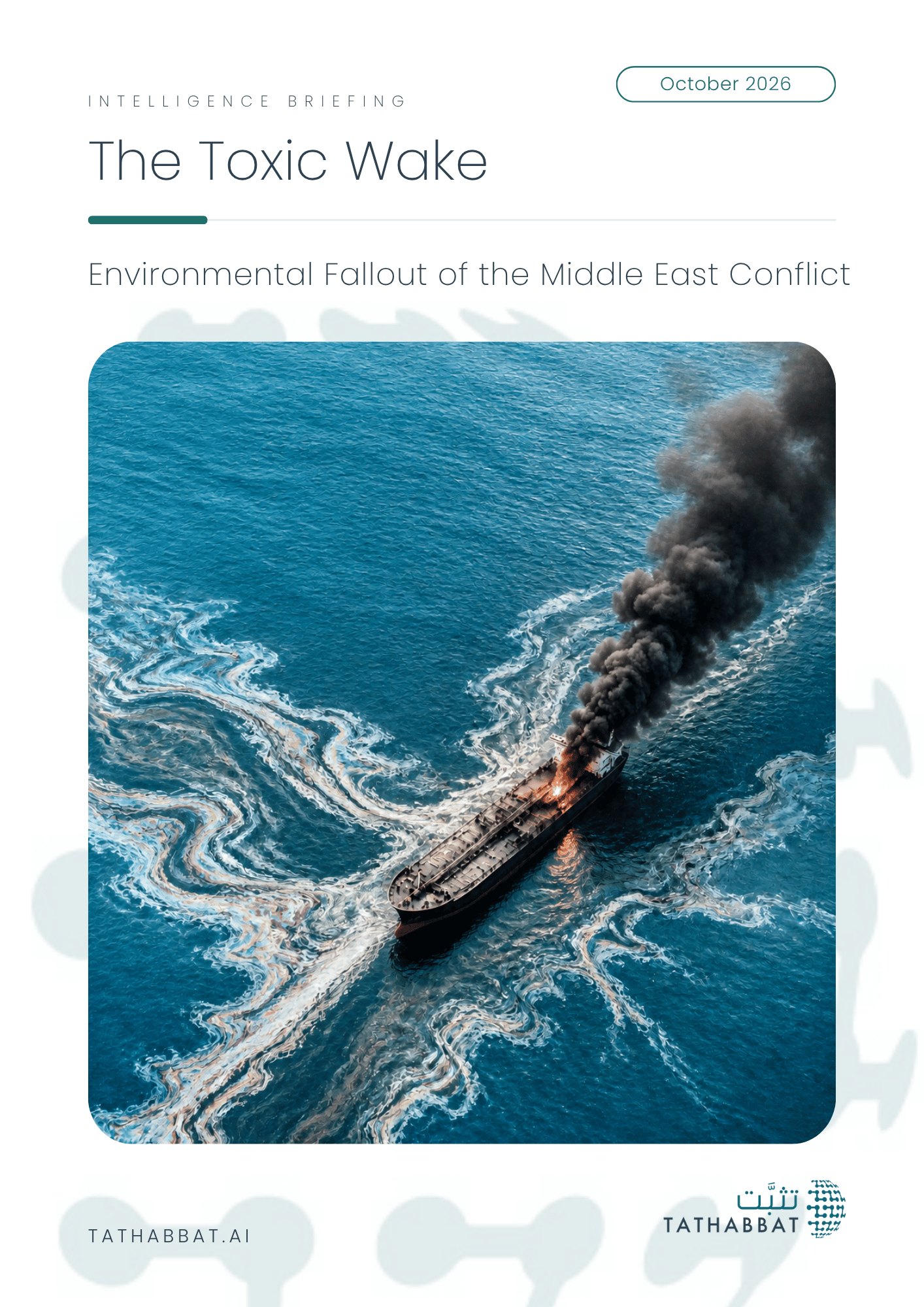
Burning tankers, drifting containers and shadow fleets: the environmental front of the Middle East conflict
On 14th October, the container ship GFS Pride sank in the Strait of Hormuz, a day after being struck by what Iran’s IRGC Navy said was a naval mine. Within days, social media was awash with footage of iPhones and luxury perfume bobbing in the water off Oman. Fact-checkers found several of the most widely shared clips to be AI-generated. What was real was far less photogenic: drifting containers that Oman’s Maritime Security Centre warned fishermen not to approach, as they may contain hazardous materials. In the first ten days of the war alone, more than 300 incidents with an environmental dimension were recorded, from tanker strikes to burning refineries and punctured fuel depots.
Most commentary on this conflict has focused on markets, sanctions and casualties. Its environmental fallout has gone largely unquantified, yet it sits as squarely on a financial crime radar as an ESG one. This briefing examines four key risk areas: marine pollution, shipping emissions, toxic contamination on land, and the sanctions evasion, fraud and resource exploitation that carry an environmental cost of their own.
What’s inside
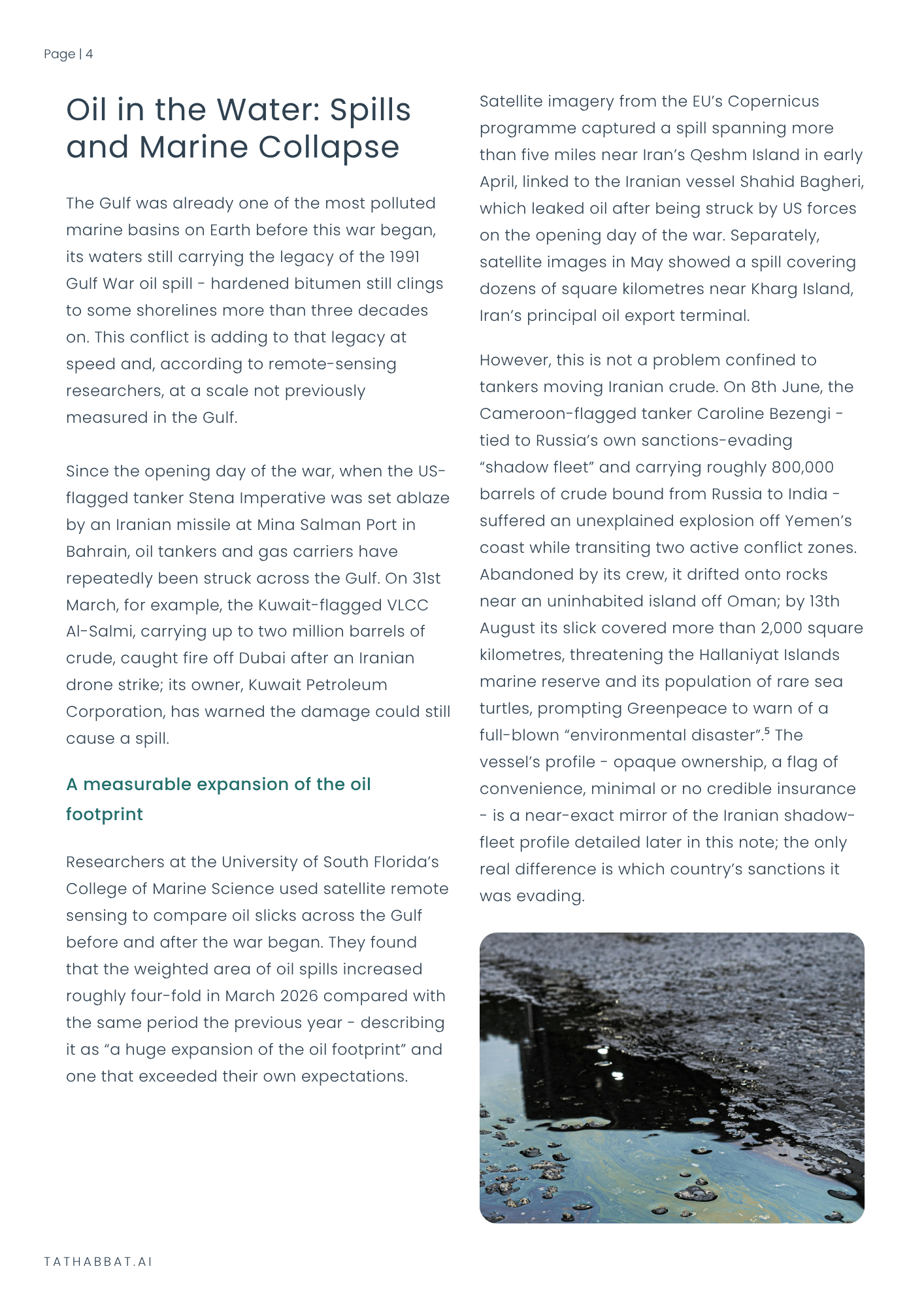
- Oil in the water: a roughly four-fold rise in the area of Gulf oil spills, the Caroline Bezengi slick off Oman, and what is at stake for one of the world’s most fragile seas
- The Hormuz effect: how rerouting around the Cape of Good Hope has reshuffled shipping emissions, and the phantom freight fraud riding on the chaos
- Toxic fallout on land: the Tehran fuel depot strikes, “black rain” and the legal gap exposed by claims of ‘ecocide’
- Shadow fleets: ageing, uninsured tankers that are both a sanctions red flag and a catastrophic spill risk, from the Shamkhani network to the Hormuz “insurance” racket
- The hidden footprint of conflict-driven fraud: AI-generated content, fake charities and crypto flows, and how to tell fact from fake
- Resource exploitation and environmental crime risk: what is confirmed, what is anticipated, and the threat outlook for the months ahead
- What firms must do now: a best-practice checklist mapped to these threats, from risk assessment and policies to systems, training, governance and reporting
Packed with Exclusive content